
Grounded 2 does what a lot of survival games do wrong at the start: it dumps you into a massive open world, gives you a broken tool, and says good luck. Brookhollow Park is three times the size of the original game’s backyard, and if you don’t know what to focus on, those first few hours can feel like stumbling around in tall grass waiting for something to eat you. Which, to be fair, is exactly what will happen.
I jumped into Grounded 2 on day one and made every rookie mistake the game lets you make. Built my first base next to a spider den. Ignored the Omni-Tool upgrades. Ran out of water because I didn’t know dew drops existed. This guide is the roadmap I wish I had, broken into clear phases so you actually know what to prioritize.
Before You Start: Pick Your Difficulty
Grounded 2 launches with multiple difficulty settings. If you’re new to the series or survival games in general start on Mild or Medium. These give you the full experience, hunger, thirst, hostile bugs, and all, without the punishing death penalties that make the harder modes frustrating while you’re still learning.
Creative Mode is also available if you want to build freely without enemies, and Woah! mode is there for masochists (friendly fire is enabled). You can change difficulty at any time, so don’t overthink this. Start comfortable and crank it up when you’re ready.
One settings tip most guides skip: rebind your Omni-Tool controls immediately. The default key bindings create constant conflicts where you accidentally start chopping when you’re trying to pick something up, or mount a nearby buggy when you’re trying to harvest. Spend two minutes in the settings menu before you leave the tutorial area. You’ll thank yourself later.
Hours 1-3: Survive and Find the Ranger Outpost
You start in a training facility that teaches basic movement and combat. Once you step outside, you’re in Brookhollow Park with one objective: find the Snackbar Ranger Outpost. Head toward the marker on your compass. This outpost is your first safe haven and the location of your first Resource Analyzer.
Along the way, pick up everything. Pebbles, sap, sprigs, clover leaves, plant fiber. If it glows or has an interaction prompt, grab it. Your inventory will fill up fast, which is fine. You need these materials for your first crafting recipes.
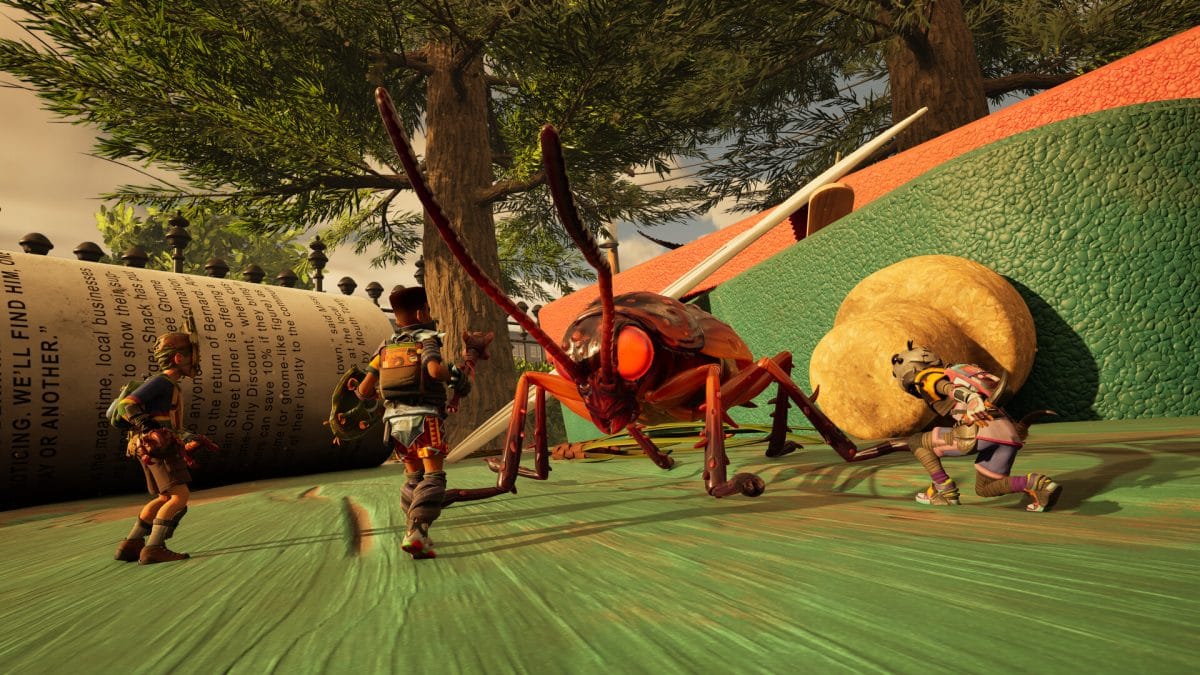
Image: Grounded 2 Press Kit
Immediate priorities:
Water. Fresh water is harder to find than you’d expect. Look for dew drops on the tips of grass blades, especially in the morning before the sun burns them away. Hit the grass stalk and the droplet falls. Drink it before it rolls away. There’s also a water pipe near the Snackbar Ranger Station, but it drips intermittently.
Food. Kill mites (the tiny red bugs). They’re the weakest enemies in the game and drop Mite Meat, which you can cook on a Roasting Spit for easy early food. Aphids are another option but they run from you.
Shelter. Craft a Lean-To as soon as you have 3 Clover Leaves and 1 Sprig. This is your respawn point. Interact with it and set it as active. Every time you move to a new area of the map, build a new Lean-To and update your respawn. Dying far from your respawn point means a long, frustrating walk to retrieve your stuff.
Hours 3-5: Analyze Everything and Build Your First Base
Once you reach the Ranger Outpost, the Resource Analyzer becomes your best friend. Scan every new material you find. This does two things: it unlocks new crafting recipes and it gives you Raw Science, the currency you spend at the Science Shop to unlock even more recipes. Many players skip this and then wonder why they can’t craft basic items. The analyzer is not optional. It’s the progression system.
Your first real base should be near the Ranger Outpost. Build on elevated terrain if possible. The wood plank stacks near the starting area are a popular first base location because they keep you above ground-level bugs and close to essential resources. Scout the area before placing your base, look for webs (spiders nearby) and ant trails (ants will investigate your base if you build too close to their paths).
Essential base structures, in order:
- Lean-To (respawn point)
- Workbench (crafting station)
- Storage chests (you’ll accumulate materials fast)
- Roasting Spit (cook food)
- Dew Collector (passive water source, build this early)
- Trail Markers (place these at your base and at points of interest around the map)
Trail markers are underrated. The map is enormous and disorienting at ant-size. Markers come in different colors and icons, so you can tag your base, resource deposits, blocked passages, and danger zones. Use them liberally.
Hours 5-7: Upgrade the Omni-Tool and Get a Buggy
This is where Grounded 2 diverges from the original game. Instead of crafting individual tools (pebblet hammer, acorn shovel, etc.), everything runs through the Omni-Tool, an all-in-one device that you upgrade to unlock new functions: axe, shovel, hammer, wrench.
Your starting Omni-Tool only has the axe function. You need to unlock the shovel and hammer upgrades as soon as possible, because higher-tier resources require specific tool types to harvest. The main story quests guide you toward these upgrades naturally. Follow the quest markers.
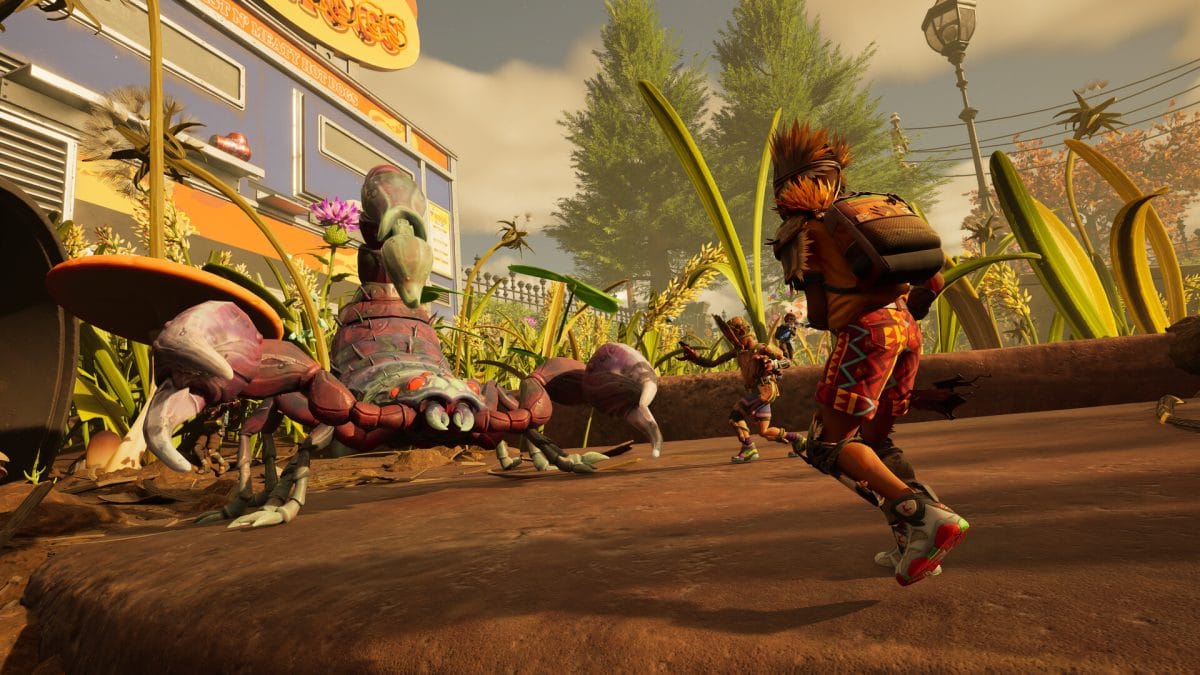
The other game-changer in your first 10 hours is getting a Buggy mount. After finding a Red Soldier Ant Egg and building a Hatchery, you can hatch a Red Soldier Ant Buggy. This transforms how you play:
- Speed. The park is massive. Walking takes forever. Buggies let you sprint across the map.
- Storage. Each buggy has its own inventory, effectively doubling your carry capacity.
- Combat. Your buggy fights alongside you and can even recruit other ants to join.
Prioritize getting your first buggy. The story quests lead you toward this naturally, but if you’re wandering, look for ant eggs in ant hills. The Hatchery blueprint unlocks through the quest line.
Hours 7-10: Archetypes, Combat, and the Story
By hour 7 you should have a functional base, an Omni-Tool with at least two upgrades, a buggy, and a basic understanding of how resources and crafting work. This is when Grounded 2 starts to feel less like survival and more like an adventure.
Choose your archetype. Grounded 2 introduces a flexible class system tied to your gear. You’re not locked into a choice. You switch by changing armor and weapons:
- Warrior: Tank build. Heavy weapons, Ladybug armor, sword-and-shield for blocking.
- Ranger: Ranged. Bow-focused, Orb Weaver set, pick off enemies from distance.
- Mage: Elemental. Candy staves, Butterfly armor, spellcasting playstyle.
- Rogue: Fast and deadly. Dual daggers with venom, gap-closing attacks.
Experiment with what feels good. You can swap freely, so nothing is permanent. If you’re struggling with combat, Warrior with a shield is the most forgiving starting setup. Perfect blocks trigger parry stuns that create openings for counterattacks.
Follow the main story. I know the temptation to wander is strong, but the Grounded 2 quest line is genuinely well-paced. It introduces crafting tiers, base-building concepts, and exploration zones at the right difficulty level. The story acts as a natural tutorial for systems the game doesn’t explain explicitly. Once you’ve completed the first act (roughly 18 hours for the story alone, but the first act’s early beats fit within your first 10 hours), you’ll have enough knowledge to explore independently.
Mistakes Every Beginner Makes
Building too close to aggressive bugs. Scout first. If you see webs, ant trails, or scorpion burrows near your planned build site, move. Bugs will investigate your base, and early-game walls won’t stop them.
Ignoring the Resource Analyzer. Scan everything. Every time you pick up a new material, analyze it at the nearest Ranger Outpost. This is how you unlock recipes. Skipping it means hitting walls where you can’t craft essential items.
Fighting spiders and scorpions too early. These are mid-to-late game enemies. Mites and larvae are your training dummies. Get comfortable with blocking and perfect parrying before you even look at a spider.
Forgetting to set your Lean-To respawn. Building a Lean-To isn’t enough. You have to interact with it and actively set it as your respawn point. I’ve seen people build six Lean-Tos and never activate one.
Not using PEEP.R to scan enemies. The PEEP.R (your binocular scanner) reveals enemy weaknesses, resistances, and vulnerable points. Use it on every new creature before engaging. This tells you whether to use slashing, stabbing, or blunt damage, which makes fights significantly easier.
Frequently Asked Questions
Do I need to play Grounded 1 before Grounded 2?
No. Grounded 2 is designed as a standalone experience with a new story set in Brookhollow Park. You’ll recognize some references if you played the original, but no prior knowledge is required. The mechanics are also different enough (Omni-Tool, buggy mounts, archetypes) that Grounded 1 experience doesn’t give you a major advantage.
If this is your first survival game and you want to compare approaches, our No Man’s Sky beginner guide uses the same first-10-hours format.
Is Grounded 2 fully released?
No. Grounded 2 has been in early access since July 29, 2025, on PC (Steam) and Xbox Series X/S. The Toxic Tangle update in January 2026 added a new Garden biome, new creatures, and the Ladybug Buggy. A full 1.0 release is expected to follow a similar timeline to the original game, which spent about two years in early access. PS5 and Nintendo Switch versions are expected at or after full release.
How many players can play Grounded 2 co-op?
Up to 4 players in online co-op. The game is also fully playable solo, though co-op survival hits different — it’s one of the reasons No Man’s Sky still has no equal in that space. Co-op makes the early hours easier because you can split resource gathering duties and revive each other during tough fights.
What’s the best first buggy in Grounded 2?
The Red Soldier Ant Buggy is the first mount most players unlock. It’s fast, has decent storage, and can fight alongside you. Later, you can unlock the Orb Weaver Buggy (spider mount) and the Ladybug Buggy (tank with a water cannon, added in the Toxic Tangle update)..
How big is the Grounded 2 map compared to the first game?
Brookhollow Park is significantly larger than the original backyard, and the current early access version already approaches the first game’s total size. With planned updates adding new areas through 2026, the full map at 1.0 is expected to be roughly three times larger than Grounded 1.