
Survival games are everywhere right now. But if you’ve never played one, staring at a Steam page with hundreds of options is honestly overwhelming. Do you start with Minecraft? Valheim? Something with zombies? And why do half of them look like they want to punish you for existing?
I’ve been playing survival games on and off for years, mostly on PC, and I can tell you that picking the wrong first survival game to play is the fastest way to bounce off the entire genre. Start too hardcore and you’ll quit in frustration. Start too easy and you won’t understand what makes these games special. This roadmap gives you a clear path based on what kind of experience you’re actually looking for.
What Makes Survival Games Click
Before jumping into recommendations, it helps to understand what survival games actually ask of you. At their core, every survival game shares a few mechanics: resource gathering, crafting, building, and staying alive against some kind of threat. That threat could be hunger, weather, monsters, or other players.
The difference between a good first experience and a bad one usually comes down to two things: how much the game explains to you, and how quickly it punishes mistakes. Some games gently guide you through the basics. Others dump you naked on a beach and let a wolf eat you within 30 seconds. Both can be great, but only one of those is a good starting point.
Your First Survival Game: The Safe Bet
Minecraft is still the single best first survival game to play in 2026, and it’s not even close.
I know, I know. It doesn’t look like a “real” survival game. The blocky graphics and the massive cultural presence make it easy to dismiss. But Minecraft’s survival mode teaches you every foundational skill you’ll need in harder games later: gathering resources, crafting tools, building shelter before nightfall, managing hunger, and exploring progressively more dangerous areas.
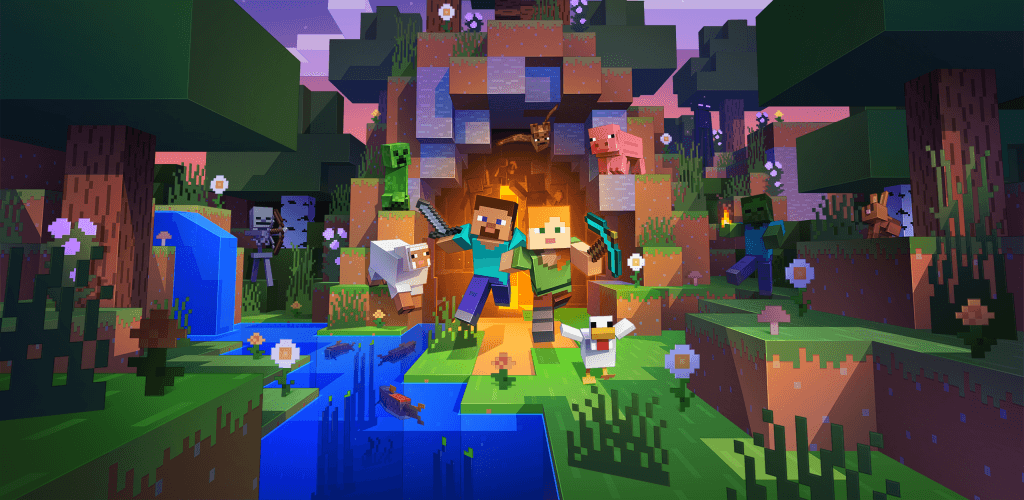
Image: Minecraft Press Kit
What makes it perfect for beginners is the pacing. Your first night is genuinely tense when you don’t know what you’re doing. But the consequences of dying are mild, the crafting system is intuitive once you get the basics, and there’s no pressure to rush. You learn at your own pace.
Minecraft is available on pretty much every platform imaginable, including PC, PlayStation, Xbox, Nintendo Switch, and mobile. The Java and Bedrock Edition bundle runs about $30, and it’s also included with Xbox Game Pass.
Start here if: You’ve never touched a survival game before and want to learn the fundamentals without getting punished.
Step Up: Story-Driven Survival
Once Minecraft’s survival mode feels comfortable, you’re ready for something with a bit more atmosphere and structure. This is where Subnautica comes in.
Subnautica drops you on an alien ocean planet after a crash landing. Instead of forests and caves, you’re exploring coral reefs, deep sea trenches, and underwater cave systems. The survival mechanics are more involved than Minecraft, as you’re managing oxygen, food, water, and crafting increasingly advanced equipment to go deeper.
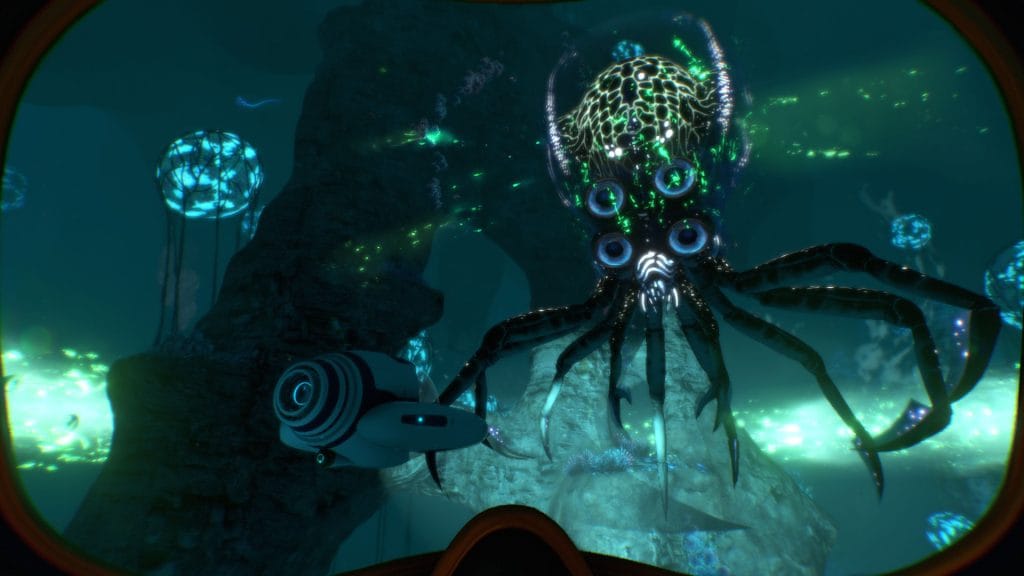
Image source: Subnautica
What sets Subnautica apart as a second survival game is the story. There’s a genuine narrative pulling you forward, giving you purpose beyond “just survive.” Most survival games are pure sandboxes. Subnautica proves the genre can deliver a real plot while still making you scrounge for resources.
It has an Overwhelmingly Positive rating on Steam with over 310,000 reviews. The base price is $29.99, though it regularly drops to $10 or less during Steam sales. It’s available on PC, PlayStation, Xbox, and Nintendo Switch.
One heads up: if deep water freaks you out, Subnautica will absolutely test that. The deeper you go, the darker and more unsettling it gets. But that tension is part of what makes it so memorable.
Start here if: You want a survival game with an actual story and don’t mind exploring alone.
Going Co-op: Survive With Friends
Playing survival games with friends changes everything. If you want to learn the genre alongside someone else, Grounded and Raft are two excellent options with very different vibes.
Grounded
Grounded shrinks you down to the size of an ant in a suburban backyard. Suddenly, ants are terrifying, spiders are boss-fight material, and a juice box is a landmark. It’s developed by Obsidian Entertainment and it’s one of the most polished survival games out there.
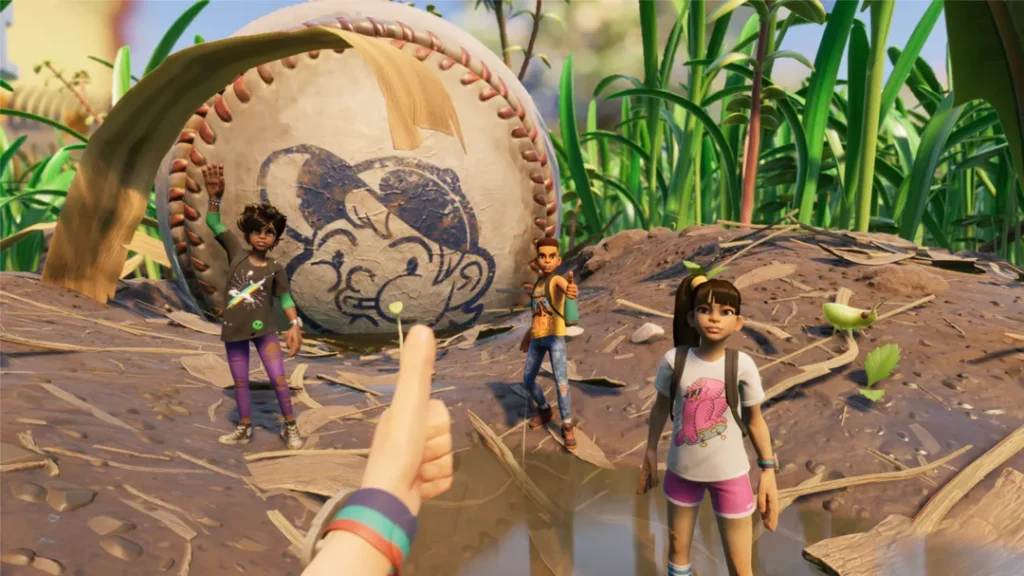
Image source: Grounded Press Kit
The game supports up to 4 players in co-op and has adjustable difficulty settings, so you can dial it down if the spiders are too much (and they will be too much, trust me). It’s available on PC, Xbox, PlayStation, and Nintendo Switch, with a full release price of about $40. It’s also on Game Pass.
A quick note: Grounded 2 launched in early access in July 2025 and is already pulling in players with a bigger map and new mechanics like rideable bug mounts. But for a first-timer, I’d actually recommend starting with the original Grounded. It’s a complete, polished experience with a full story, while the sequel is still being built out and won’t hit 1.0 for a while.
Raft
Raft takes a completely different approach. You start on a tiny raft in the middle of an endless ocean, hooking debris from the water to expand your floating home. It’s surprisingly relaxing despite the shark constantly circling your raft and trying to chew pieces off.
The concept is dead simple, which makes it perfect for bringing friends into the genre who might be intimidated by more complex games. You can play with up to 10 people in online co-op, and the game launched on PS5 and Xbox Series X/S in December 2024 with full crossplay support, so you can team up with friends regardless of platform.
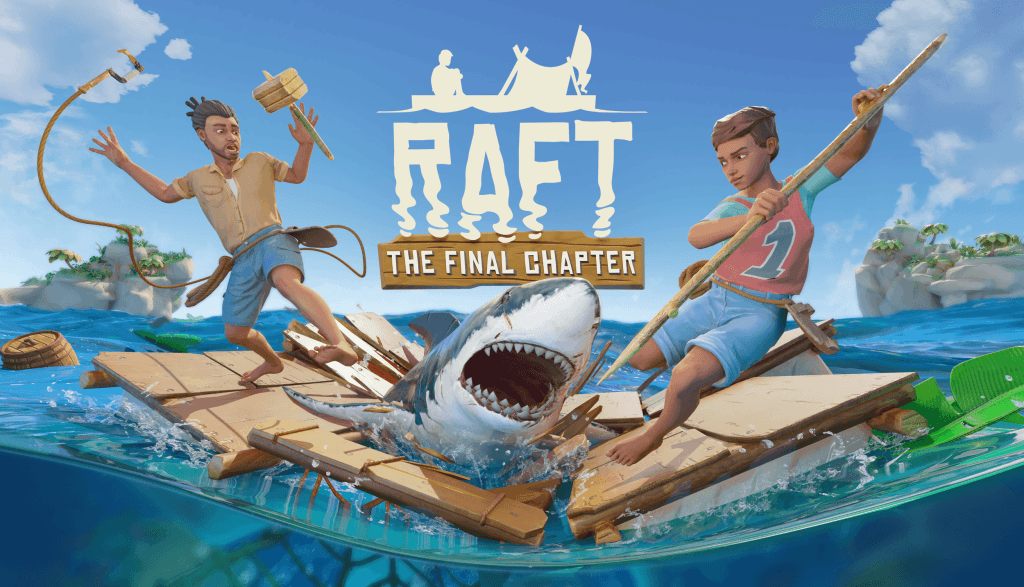
Image source: Raft Press Kit
Start here if: You want to learn survival mechanics with friends in a low-pressure setting.
Ready for a Real Challenge
After you’ve got a few survival games under your belt, you might want something with a bit more bite. Valheim hits that sweet spot between accessible and demanding.
Valheim drops you into a Viking-inspired afterlife where you need to prove yourself worthy of Valhalla. The survival mechanics are deeper here: food doesn’t just keep you alive, it determines your max health and stamina. Building has actual structural physics. And the boss fights are legitimately challenging.
What keeps Valheim beginner-approachable despite its depth is the cooperative design. It supports up to 10 players, and having even one experienced friend makes the learning curve much smoother. The community is also one of the most helpful in gaming.
Valheim is still technically in early access after selling over 12 million copies. It’s currently on PC and Xbox, with a PlayStation 5 version confirmed for 2026. The price sits around $20, making it one of the best values in the genre.
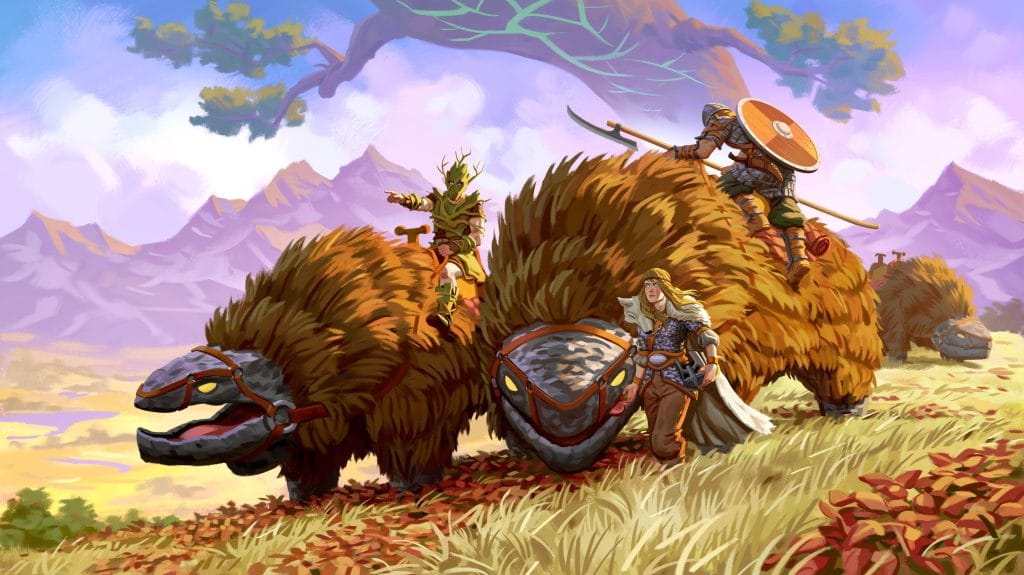
Image source: Velheim Press Kit
Start here if: You want a survival game that actually challenges you but still feels fair.
Games to Avoid as Your First
Just as important as knowing where to start is knowing what to skip early on. These are great games, but terrible first survival experiences:
Rust throws you into a server full of hostile players who will absolutely destroy you on sight. The learning curve is a cliff, not a curve. Save it for later.
DayZ is similar, but slower and arguably more punishing. Incredible once you know what you’re doing, miserable when you don’t.
Don’t Starve looks cute but has permadeath and deliberately obscure mechanics. It’s a fantastic game that I’d recommend after you’ve built some survival game literacy, not before.
The Roadmap at a Glance
Here’s the progression I’d recommend for someone completely new to survival games:
Step 1: Minecraft — learn the fundamentals with minimal punishment. Step 2: Subnautica — experience survival with narrative purpose. Step 3: Grounded or Raft — bring friends into the genre. Step 4: Valheim — embrace the full depth of what survival games offer.
You don’t have to follow this order exactly. If your friends are already playing Valheim, jump in with them. If Subnautica’s underwater setting doesn’t appeal to you, skip straight to Grounded. The point isn’t to check every box. It’s to find your entry point and avoid the games that’ll make you give up before you realize how good this genre can be.
Frequently Asked Questions
What is the easiest survival game for beginners?
Minecraft in survival mode is the easiest and most forgiving survival game for beginners. The mechanics are intuitive, death penalties are mild, and you can adjust the difficulty at any time. If you want something with no combat pressure at all, Astroneer is another ultra-relaxed option.
Can I play survival games solo or do I need friends?
Most survival games work perfectly solo. Minecraft, Subnautica, and Valheim all have excellent single-player experiences. Co-op just adds another layer of fun and makes learning faster, but it’s never required.
Are survival games hard?
It depends entirely on which one you pick. Minecraft on normal difficulty is very manageable for anyone. Rust and DayZ, on the other hand, are designed to be brutal. That’s why your first survival game to play matters so much. Pick the right starting point and the genre feels welcoming, not punishing.
Is Valheim good for beginners?
Valheim is great as a second or third survival game. It’s deeper than Minecraft or Grounded, with more complex food, building, and combat systems. Playing with at least one experienced friend makes the early hours much smoother.
Should I start with Grounded or Grounded 2?
Start with the original Grounded. It’s a complete game with a full story and years of polish. Grounded 2 entered early access in July 2025 and is still being actively developed. It’s excellent, but you’ll get a more complete first impression from the original.
One Response