
No Man’s Sky is one of those games that will either hook you for hundreds of hours or lose you in the first three. The difference usually comes down to whether you know what to focus on early. The game throws a lot at you all at once, and the built-in tutorial, while better than it used to be, still leaves massive gaps.
I’ve put a lot of time into No Man’s Sky over the years, and after the Worlds Part II and Remnant updates in 2025 and 2026, the game is in the best state it’s ever been. But that also means there’s more to learn than ever. This beginner guide breaks your first 10 hours into clear phases so you know exactly what to prioritize and what to ignore until later.
Before You Start: Pick the Right Mode
No Man’s Sky offers several game modes. If you’re brand new, start with Normal mode. It’s the balanced experience where survival mechanics exist but aren’t punishing enough to ruin your day while you’re still learning controls.
If you’re still deciding whether a survival game is right for you, here’s how to pick your first one.
Avoid Survival and Permadeath until you’ve got at least 20 hours under your belt. And while Relaxed mode exists if you want zero pressure, Normal is where the game actually teaches you its systems through gentle consequence. Creative mode removes survival entirely, which means you skip the part of the game that makes everything else feel rewarding.
Hours 1-2: Survive Your Starter Planet
You wake up on a random planet next to a broken ship. Your hazard protection is draining, your life support is ticking down, and you have nothing. This is the most stressful part of the game and the moment where most beginners quit. Don’t.
Here’s what to grab immediately. Sodium (yellow plants) recharges your hazard protection. Oxygen (red plants) recharges your life support. Ferrite Dust (from rocks) is the basic crafting material you need for everything. These three resources are your lifeline for the first hour. Pick up everything glowing that you walk past.
Your first real goal is repairing your ship. The game walks you through this with mission prompts in the bottom right corner of the screen. Follow them. You need Ferrite Dust, Carbon (from trees and plants), and Di-hydrogen (blue crystals on the ground) to get your ship flying again.
One tip that saves a lot of frustration: if your starter planet is brutal (extreme heat, cold, toxic, or radioactive), don’t fight it. Repair your ship as fast as possible and leave. You can always come back later when you’re better equipped. Caves are your best friend in the meantime. Hazard protection doesn’t drain inside caves, and they often contain valuable resources like Cobalt.
Hours 2-4: Follow the Artemis Path
Once you’re off your starter planet, the game opens up and it can feel directionless. This is where a lot of new players wander aimlessly and lose interest. The fix is simple: follow the Artemis Path quest line.
The Artemis Path is No Man’s Sky’s main story. It starts with a mission called “Awakenings” and it will teach you nearly every core system in the game naturally. Building a base, installing a Hyperdrive, using a Teleporter, learning alien languages, visiting space stations. The story itself is surprisingly good, and it structures your first dozen hours in a way that free exploration alone can’t.
You’ll find quest objectives in your Log (pause menu). If you ever feel lost, check your Log. Nine times out of ten, there’s a quest marker waiting for you.
During these hours you should also be doing two things on every planet you visit. First, scan everything. Use your Analysis Visor (the binocular tool on your Multi-Tool) to scan every creature, plant, and mineral you see. Each scan earns you Units, which is the game’s main currency. Later, when you install S-Class scanner upgrades, scanning a single rare creature can pay out over 100,000 Units. Second, talk to every alien you meet. Each conversation teaches you a word of their language and builds your reputation with their faction. Both of these pay off significantly over time.
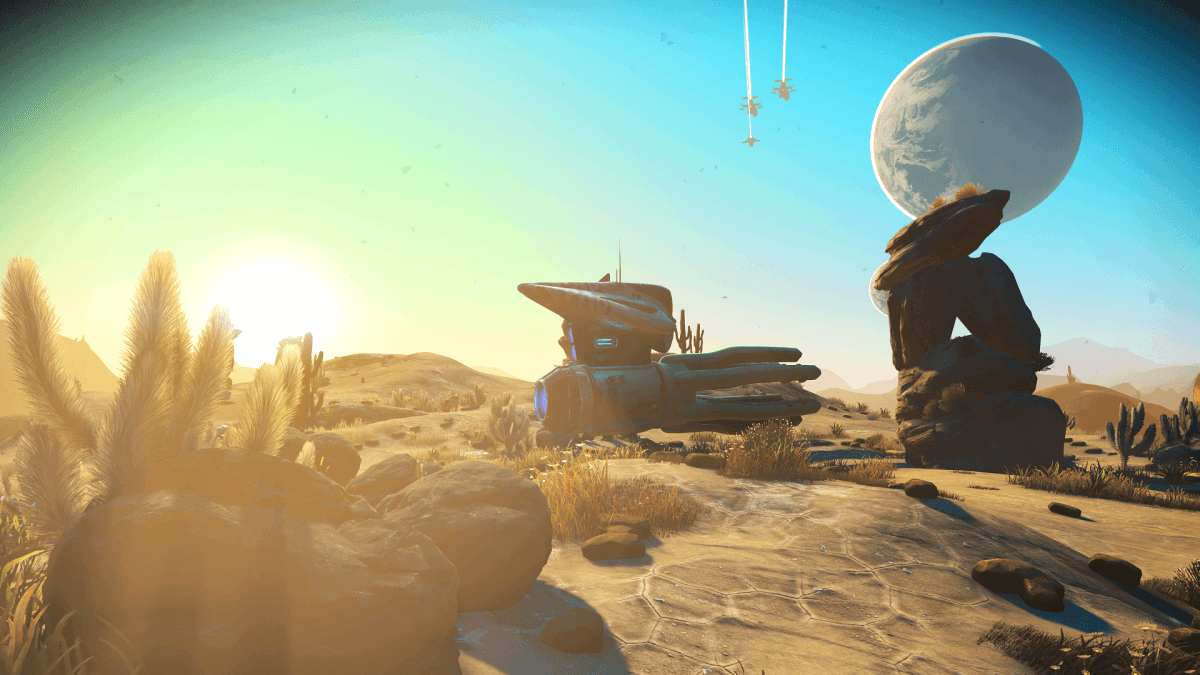
Image: No Man’s Sky Press Kit
Hours 4-6: Build Your First Real Base
The Artemis Path will prompt you to place a Base Computer and start constructing. Don’t overthink your first base. It doesn’t need to be elaborate. Think of it as a functional outpost, not your forever home.
What your first base actually needs: a wooden or metal shelter (to shield you from storms), a Save Point, a Portable Refiner, and eventually a Teleporter. The Teleporter is the most important piece because it lets you warp back to your base from any space station in the galaxy. That alone changes how freely you can explore.
A Portable Refiner is also essential early on. It lets you convert raw materials into more useful ones. For example, you can refine Ferrite Dust into Pure Ferrite, which is needed for stronger building materials and technology. You can also refine Cobalt, which is one of the best early money-making strategies. Buy Cobalt cheaply at one station, sell it at another where the price is high, and repeat.
Don’t worry about the location of your first base. You’ll build many bases throughout the game. Pick somewhere with decent resources and reasonable weather, build the essentials, and move on. Perfection comes later.
Hours 6-8: Get Your Free Freighter
This is the tip that changes everything for new players, and many guides bury it. After approximately 3 hours of total playtime and 3 warps between star systems, you’ll trigger a freighter rescue mission. You’ll warp into a system and find a freighter under attack by pirates. Destroy the pirates, dock with the freighter, and the captain will offer it to you for free.
Accept it. Your first freighter is always free. It’s essentially a mobile base that follows you between systems. You can store ships in it, build rooms inside it, send out frigate expeditions for resources, and use it as a central hub for your entire operation.
One caveat the community consistently flags: if you want a better freighter, you can decline the first one and keep playing until the rescue event triggers again (every 3 hours of play and 3 warps). Capital freighters (the massive ones) are more impressive, and you can hold out for an A or S-Class. But honestly, for a first playthrough, just take whatever you’re offered. Any freighter is a massive upgrade over no freighter.
Hours 8-10: Expand and Set Goals
By hour 8 you should have a functioning base, a freighter, a basic understanding of crafting and refining, and a story that’s pulling you forward. This is where No Man’s Sky transforms from “confusing survival game” into “I just lost 4 hours and it felt like 30 minutes.”
Now is the time to set personal goals. The game doesn’t push you toward any single activity, so pick what sounds fun and lean into it. Some options that work well after the first 10 hours:
Upgrade your Exosuit by buying inventory slots at every space station you visit (one slot per station, and there’s a backpack-shaped terminal behind the main vendor area). More inventory space means less time juggling resources.
Visit the Space Anomaly (it’s summoned from your quick menu in space). The Anomaly is the multiplayer hub and the main place to unlock new blueprints using Salvaged Data modules, which you dig up from buried technology on planet surfaces.
Start the Base Computer Archives quest to unlock more advanced building parts and farming recipes. This quest unfolds over time, giving you new blueprints at regular intervals.
And keep following the Artemis Path. It eventually leads you to unlocking Glyphs, which are the key to portal travel and reaching specific coordinates in the galaxy. That’s where the real endgame exploration begins.
Mistakes Every Beginner Makes
Hoarding everything. Your inventory will fill up fast. Learn to discard common resources like Carbon and Ferrite Dust once your stacks are full. You can always mine more. Rare resources and technology modules are worth keeping.
Ignoring the quest log. The game’s quest tracking system isn’t perfect, but it does guide you through essential systems. If you’re confused about what to do next, your Log almost always has the answer.
Spending Nanites on the first upgrade you see. Nanites are the secondary currency used for technology upgrades. Save them. Don’t buy the first B or C-Class upgrade a vendor shows you. Wait until you find A or S-Class upgrades for your scanner, Hyperdrive, or jetpack. The difference in quality is enormous.
Rushing to new systems without scanning. Fully scanning a planet’s flora and fauna earns you a completion bonus from the Anomaly. With scanner upgrades installed, this becomes one of the best passive income sources in the game.
Frequently Asked Questions
Is No Man’s Sky good for beginners in 2026?
Yes. The game has received dozens of major updates since its rough 2016 launch, including the Worlds Part II overhaul and the Remnant update in early 2026 which added a gravity gun and new exploration mechanics. The Normal mode tutorial is solid, and the community is one of the most welcoming in gaming. It’s available on PC, PlayStation, Xbox, Nintendo Switch, and even VR.
How long does it take to learn No Man’s Sky?
The first 3-4 hours are the steepest learning curve. By hour 10, most systems should feel intuitive. The game continuously introduces new mechanics through its quest lines, so you’ll still be learning new things at hour 50, but the basics click relatively quickly if you follow the Artemis Path.
Should I play No Man’s Sky solo or co-op?
Both work well. The game is a great solo experience with a genuine sense of isolation and discovery. Co-op (supported for up to 4 players) makes the early hours easier because you can share resources and divide tasks. If a friend already plays, joining their game is the smoothest way to learn.
Can I play No Man’s Sky on Steam Deck?
Yes. No Man’s Sky supports Steam Deck and runs well on it. Cross-Save is also supported across all platforms, so you can play on PC at home and continue on a handheld.
What’s the most important early upgrade?
Scanner upgrades for your Multi-Tool. Installing S-Class scanner modules turns every creature scan into a significant Unit payout. It’s the single best return on investment for early Nanites.
One Response