
Some games ease you in. Clair Obscur: Expedition 33 does the opposite.
Within its opening moments, it makes one thing clear: this is not a story about saving the world eventually.
It’s about knowing the end is coming – and choosing to walk forward anyway.
Developed by Sandfall Interactive, Expedition 33 blends turn-based combat, Souls-inspired structure, and emotionally charged storytelling into something that feels both familiar and quietly radical.
A World That Counts Down to Death
At the heart of Expedition 33 is a cruel, elegant idea.
Each year, the Paintress lowers a number on the horizon—and everyone who reaches that age is erased. This time, the number falls to 33.
The game doesn’t linger on exposition. It trusts the weight of the premise to land on its own. That confidence pays off. From the prologue onward, the tone is set: this world does not offer comfort, only meaning.
Much like the most memorable narrative-driven games, Expedition 33 understands that restraint is power. Emotional moments aren’t overexplained—they’re allowed to sit with you.
Structure: Between Freedom and Fate
Expedition 33 walks a careful line between:
- Open-world traversal, where scale and discovery slowly unfold
- Linear, tightly designed areas, built with deliberate pacing
Each region encourages exploration without overwhelming the player. Optional paths lead to:
- Hidden encounters
- Lore fragments from past expeditions
- Side areas that feel meaningful, not filler
There’s a subtle Souls-like philosophy at work here—not in difficulty for its own sake, but in how space is used to tell stories without words, a design approach popularized by games like Elden Ring
Combat That Demands Attention
On paper, the combat is turn-based, but unlike traditional JRPG systems popularized by games like Final Fantasy, it introduces reactive timing mechanics.
In practice, it rarely feels passive.
Expedition 33 introduces a reactive system where:
- Timing matters
- Defense requires awareness
- Successful parries and dodges fuel powerful abilities
It’s an unusual marriage of genres, and while it won’t click with everyone, it gives battles a sense of physical involvement that most turn-based RPGs lack.
Importantly, the game respects player preference. Certain mechanics can be adjusted—but not entirely removed—reinforcing the idea that engagement is part of the design, not an optional layer.
Sound and Vision That Carry the Experience
Few games lean this hard into atmosphere—and succeed.
The soundtrack doesn’t just accompany scenes; it defines them. Combat, exploration, and quiet moments all benefit from music that knows when to step forward and when to disappear.
Visually, Expedition 33 is striking without being loud. Its art direction favors:
- Strong composition
- Controlled color palettes
- Memorable silhouettes
It’s the kind of game that makes you stop—not because something explodes, but because the frame itself feels intentional.
Not Flawless, But Memorable
The final act slightly shifts pace. The story remains strong, but its momentum softens, and some revelations linger longer than necessary. It doesn’t ruin the experience—but it does remind you that ambition always carries risk.
Still, when the credits roll, what remains isn’t exhaustion—it’s reflection.
A Game That Trusts the Player
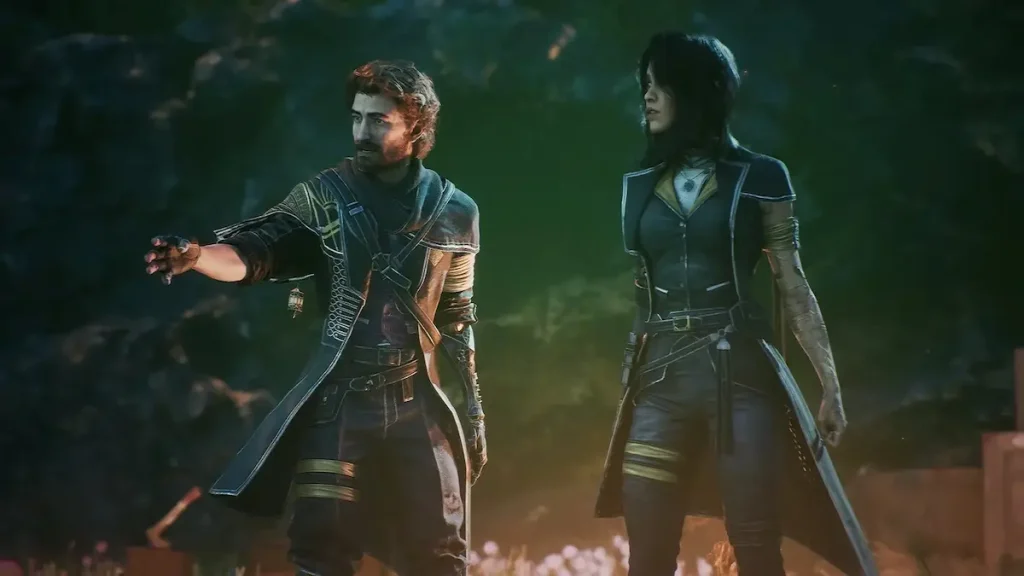
What truly sets Clair Obscur: Expedition 33 apart is how much trust it places in the player.
The game rarely explains its emotions or themes outright, instead allowing moments, environments, and quiet interactions to do the heavy lifting – it assumes patience, curiosity, and a willingness to sit with discomfort.
That confidence is refreshing in a landscape increasingly dominated by hand-holding and constant spectacle. Modern games increasingly lean toward large-scale live-service experiences and competitive systems — something we’ve seen with titles like Arc Raiders, which represents the rising popularity of extraction shooters.
Expedition 33 doesn’t rush you toward meaning—it lets you arrive there on your own.
Final Thoughts
Clair Obscur: Expedition 33 isn’t trying to be endlessly replayable, endlessly scalable, or endlessly marketable.
It’s trying to be felt.
And in an era where many RPGs are designed to stretch forever, that focus alone makes it worth paying attention to.